Important Dates – KONVENS 2026
| Activity | Date |
|---|---|
| Main Conference Dates | September 14 – 17, 2026 |
| Workshop & Tutorial Proposal Deadline | February 14, 2026 |
| Workshop & Tutorial Notification of Acceptance | February 25, 2026 |
| GermEval (Shared Task) Proposal Deadline | October 30, 2025 |
| GermEval Notification of Acceptance | November 15, 2025 |
| Conference Paper – Submission Deadline | |
| Conference Paper – Notification of Acceptance | July 10, 2026 |
| Conference Paper – Camera-Ready Deadline | August 1, 2026 |
| Workshop & Shared Task Camera-Ready Deadline | August 15, 2026 |
Program
Keynote Speakers
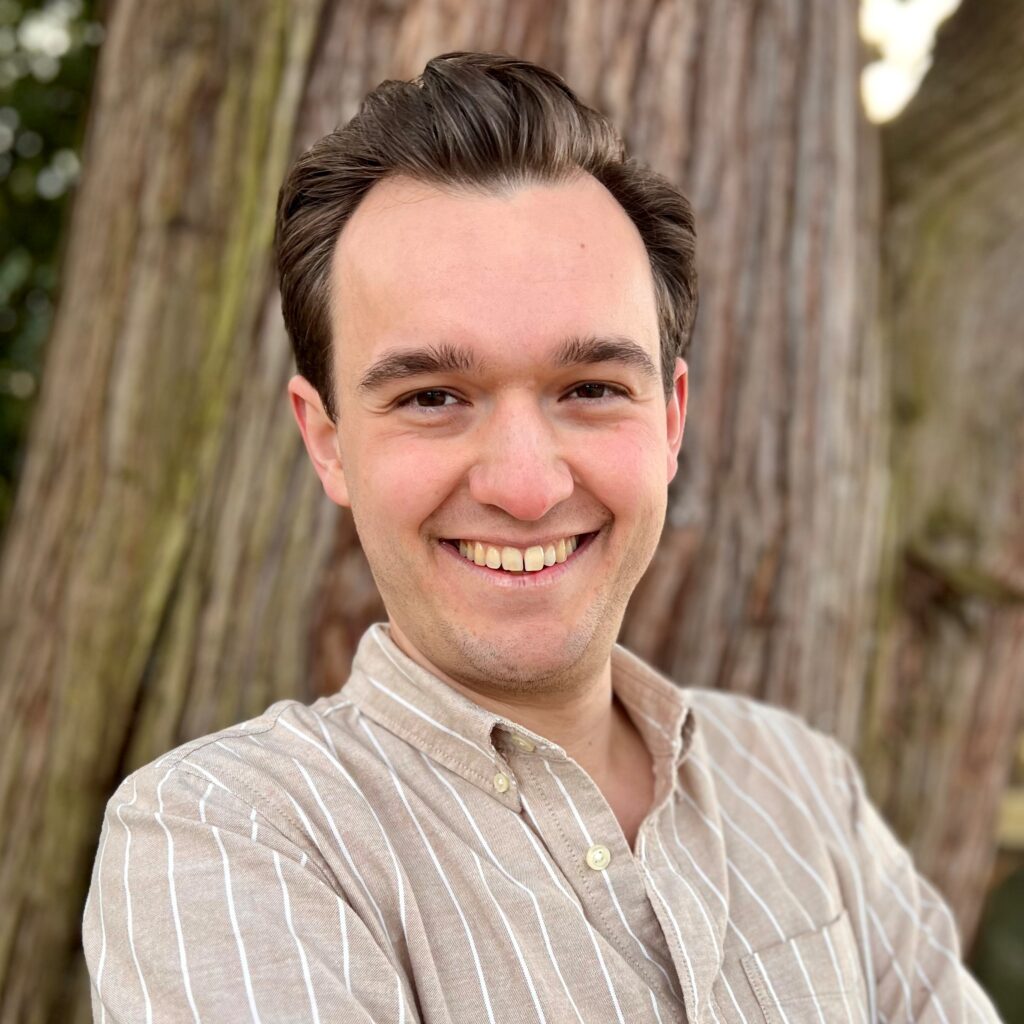
Prof. Dr. Valentin Hofmann
is a tenure-track assistant professor at LMU Munich. Previously, he was a postdoc at the Allen Institute for AI and the University of Washington. His work broadly focuses on the intersection of NLP, linguistics, and computational social science, with specific interests in tokenization and socially aware language models. Previously, he was a PhD student at the University of Oxford and a research assistant at LMU Munich. During his PhD, he also spent time as a research intern at DeepMind and as a visiting scholar at Stanford University.

Prof. Dr. Barbara Plank
Barbara Plank is Full Professor of AI and Computational Linguistics at Ludwig-Maximilians-Universität München, Co-Director of the Center for Information and Language Processing, and Head of the MaiNLP (Munich AI and NLP) Lab. She is an ELLIS Fellow and ERC grantee. Barbara is actively involved in international research communities, including the Association for Computational Linguistics (ACL) and the European Chapter of the ACL (EACL). Her research combines data-centric and human-inspired approaches in Natural Language Processing to make NLP more inclusive and fair.
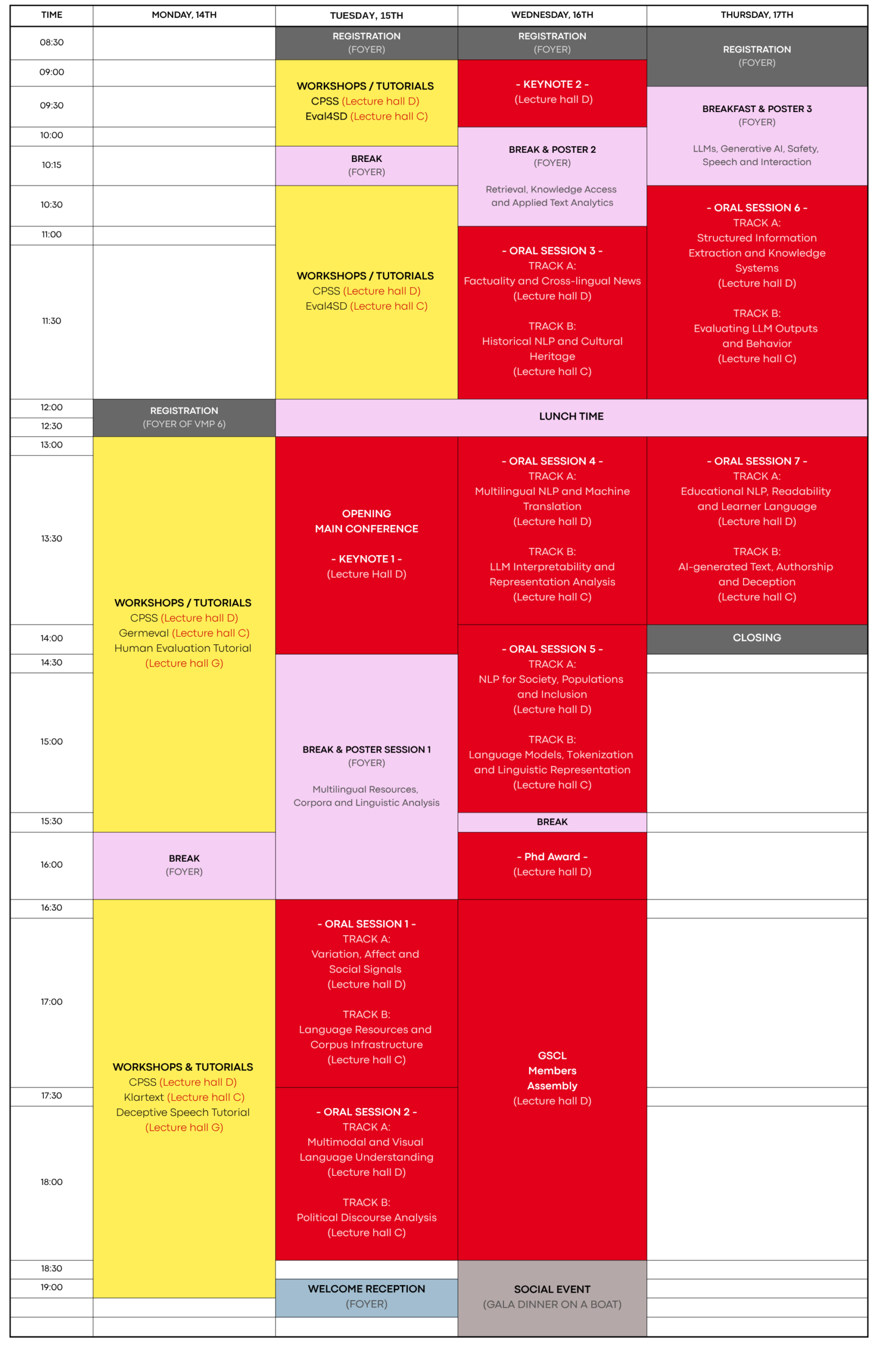
Timetable
Additional Information
– KEYNOTE 1 –
Tuesday, 15 September 2026 · 13:30 –14:30 · Lecture Hall D
The Myth of Ground Truth: Why Context and Disagreement Matter for NLP
Barbara Plank
Abstract:
Natural language processing has made remarkable progress. Yet much of this progress still rests on a powerful simplifying assumption: that for every input there exists a single correct answer, a single ground truth, to be recovered independent of who is asking, who is answering, and in what context.
In this talk, I argue that this assumption is often at odds with how language actually works, and with the complex, ambiguous, and inherently human environments in which language technology operates. Meaning is filled in by context: by what a sentence implies rather than states explicitly, by who interprets it and what perspective, language, dialect, or background they bring. Drawing on research on human label variation, ambiguity, and the evaluation of foundation models, I show that this variation is natural, not noise to be eliminated, but signal to be understood. I close by considering what this means for generative AI and alignment.
Human-centered NLP is multi-faceted: building inclusive systems around people means building them around their disagreement, not despite it.
– KEYNOTE 2 –
Wednesday, 16 September 2026 · 09:00 –10:00 · Lecture Hall D
Evaluation in Context: Humans, Machines, and the Crisis of Validity
Valentin Hofmann
Abstract:
Language model evaluation is facing a crisis of validity: models increasingly excel on established benchmarks, yet benchmark performance can be a poor indicator of how systems behave in the wild. In this talk, I will argue that making evaluation meaningful requires taking context seriously — not only the context of the humans who use and are affected by language models, but also the context of the models being evaluated.
I will first examine social bias evaluation as an example of core validity issues in current practices and discuss efforts to build benchmarks that more closely reflect the ways in which people actually use language models as well as the harms they experience. Turning from humans to machines, I will then show how the value of an evaluation item depends on the model taking the test, and how this insight can be leveraged through psychometric methods to improve validity. I will conclude by making the case for a future of language model evaluation that takes into account both the humans around our systems and the machines in front of us.
POSTER SESSION 1
Tuesday, 15 September 2026 · 14:30–16:30
Multilingual Resources, Corpora and Linguistic Analysis
[15] Low-Resource Morphological Inflection for Kashubian
(Lucy Yang; Shu Okabe; Alexander Fraser)
[131] LuxInstruct: A Cross-Lingual Instruction Tuning Dataset For Luxembourgish
(Fred Philippy; Laura Bernardy; Siwen Guo; Jacques Klein; Tegawendé F. Bissyandé)
[94] Glitter: A Multi-Sentence, Multi-Reference Benchmark for Gender-Fair German Machine Translation
(A Pranav)
[128] Multilingual Interlinear Glossing in GF
(Adrian De Lon; Inari Listenmaa)
[122] PāliUD: Prompt-engineered annotation and philological evaluation for the Pāli Treebank
(Lin Chia-Wei; Jasvinder Singh; Khemarato Bhikkhu)
[72] Epistemic Discourse Annotation for Arabic: Building a Gold-Standard Corpus from Al-Ris¯ala
(Eid Mohamed; Tariq Yousef)
[71] Context Matters in Translation: A Corpus-Based Study of Cultural Variation in Arabic Shakespeare Translations
(Fatima Al-Abdulla; Eid Mohamed; Tariq Yousef)
[130] Creating an out-of-domain corpus with multi-level annotations: processing pipeline, Easy German NLP challenges, and licensing issues
(Mehmet Koray Tulgar; Sarah Jablotschkin)
[134] PlainMedScale: A Corpus of Multi-Level Simplified Medical Texts in German and English
(Bruno Brocai; Ilaria Papagno; Mayumi Ohta)
[74] Simplified for Whom? On the Differences between Language Learner Texts and Simplified Language
(Miriam Anschütz; Moritz Dittmeyer; Lisa Stengel; Georg Groh)
[67] Measuring the Influence of Text Normalization on the Prediction of Text Complexity of Learner Productions
(Jeanette Bewersdorff; Josef Ruppenhofer; Torsten Zesch)
[106] A Mobile-assisted Language Learning and Data Collection Pipeline for Endangered Language Communities
(Hannah M. Claus)
[28] TINY_SCHILLER: A Drop-In German Drama Corpus for Small Language Models
(Mark Schutera)
[116] My grat destress – POS tagging 18th-century English letters
(Lassi Saario-Ramsay; Janine Siewert; Lidia Pivovarova; Akseli Kettunen; Inga Kokkonen; Tanja Säily)
[141] Automatic Situation Entity Segmentation for Historical and Contemporary English and German
(Hanna Schmück; Veronika Urban; Xaver Maria Krückl; Sonja Zeman; Claudia Claridge; Annemarie Friedrich)
[25] The Impact of Synthetic Data Augmentation on Discourse-Pragmatic Function Classification
(Sara Sorahi; Kevin Tang; Kazemian)
[104] KNN-ConcrItUp! A Language-Agnostic, Interactive, and Interpretable System for Extrapolating Concreteness Norms
(Sven Naber; Marina Aziz; Diego Frassinelli; Sabine Schulte im Walde)
[4] Do LLMs Normalize Too Much? Controlled Intervention for Reliable NLP Annotation of Non-Standard German Song Lyrics
(Roman Schneider)
[61] BabyLMs’ First Counting Tasks: Character Tokenization Boosts Posttraining
(Bastian Bunzeck; Laurens Winkler; Sina Zarrieß)
POSTER SESSION 2
Wednesday, 16 September 2026 · 10:00–11:00
Retrieval, Knowledge Access and Applied Text Analytics
[101] Mind the Gap: Bridging Query Formulation and Provider Vocabularies in RDM Cataloques
(Timm Lehmberg)
[118] Not All Context Helps: Isolating Graph Expansion and Community Summaries in Scientific RAG
(Filip Nový; Tariq Yousef)
[56] Designing Reliable RAG Systems for Large-Scale Engineering Environments
(Ekaterina Voronina)
[29] Improving German VET Test Item Retrieval with ESCO-Grounded Knowledge Graph Re-Ranking
(Alonso Palomino)
[5] Dynamic Thematic Classification for DeReKo: An Exploratory Study Using Wikipedia’s Open Taxonomy
(Jennifer Ecker; Marc Kupietz)
[40] Value Creation Radar: Interactive Schema-guided Emerging Topic Detection
(Yuri Campbell; Jan Peuckert; Michael Prilop; Sebastian Haugk; Elena Senger)
[53] Multilingual Topic Modeling of Climate Change and Public Health Discourse in Online News (2020-2025)
(Luis Fernando Ramirez Ruiz; Silvan Wehrli; Christopher Irrgang)
[36] news-crawler-LM: A Small Long-Context Model For High-Quality News Crawling
(Jonas Golde; Pascal Stolzenburg; Max Dallabetta; Alan Akbik)
[80] DEClimate: A Dataset of Climate Change Discourse in German Politics
(Ronja Memminger; Manfred Stede)
[120] Evaluating Open-Source LLMs for Text Summarization and Named Entity Recognition in Apartheid Witness Reports
(Pauline Kister; Miriam Schirmer)
[133] Extending a Parliamentary Corpus with MPs’ Tweets: Automatic Annotation and Evaluation Using PARTWEETCORPUS
(Mevlüt Bagci; Ali Abusaleh; Daniel Baumartz; Alexander Mehler; Giuseppe Abrami; Maxim Konca)
[132] Online popularity and Parliamentary decisions: Comparing social media posts of German politicians and voting behavior
(Rudy Alexandro Garrido Veliz; Adem Chanie Ali; Tim Niklas Porth; Seid Muhie Yimam; Martin Semmann)
[103] Measuring Revision Behaviour via Similarity Metrics in Educational Settings
(Andrea Horbach; Ronja Laarmann-Quante; Thorben Jansen; Johanna Fleckenstein)
[77] Reinterpreting the surprisal calculation of the Topic Context Model
(J. Nathanael Philipp)
[87] A flexible and transparent feature processing pipeline for multivariate analysis of texts in context
(Florian Frenken; Tatiana Serbina; Stella Neumann; Stephanie Evert)
[96] Semantic Similarity is Multidimensional: Variation-Aware Evaluation for Medical Text
(Akhil Juneja; Nils Feldhus; Roland Roller)
[59] Efficient Paraphrase Detection With Embeddings
(Giovanni Rocci; Andrianos Michail; Andreas Loizidis; Simon Clematide; Juri Opitz)
[44] To MRL or not to MRL: Random Vector Truncation is as Effective as Matryoshka Representation Learning, Except With Heavy Truncation
(Sotaro Takeshita; Yurina Takeshita; Simone Paolo Ponzetto; Daniel Ruffinelli)
[45] Complete Evidence Extraction with Model Ensembles: A Case Study on Medical Coding
(Katharina Beckh; Sven Heuser; Stefan Rueping)
[105] A Window to the Mind: Analyzing Online Communication to Improve Child and Adolescent Mental Health Care
(Jakob Prange)
POSTER SESSION 3
Thursday, 17 September 2026 · 09:30–10:30
LLMs, Generative AI, Safety, Speech and Interaction
[31] Context Matters in AI-Generated Academic Writing: Metadiscourse and Source Grounding
(Meshari Alsairi)
[119] Text Characteristics Reveal AI-Written News
(Felix Thielen; Selina Gabric; Anastasia Yablokova; Ahmed Mahmoud)
[78] SOS: Analysis of Surface-over-Semantics in Multilingual Text-To-Image Generation
(Carolin Holtermann; Florian Schneider)
[48] The Impact of Editorial Intervention on Detecting Native Language Traces
(Ahmet Yavuz Uluslu; Mark Gales; Kate Knill; Gerold Schneider)
[35] Redirecting Linguistic Attention: From LLM Encoding to Interaction and Impact
(Kai Kugler)
[7] Text-to-Speech Based Emotion-Aware Human-Robot Dialogue System
(Elnur Alimirzayev; Burak Can Kaplan; Cornelius Weber; Stefan Wermter)
[34] Emotion-Aware Embedding Fusion in Large Language Models for Intelligent Response Generation in Mental Health Counselling
(Ransford Oppong; Juliet Arthur; Vida Kasore; Betty Agyei Kponyo; Justice Owusu Agyemang; Jerry John Kponyo)
[146] Towards Understanding Zero-Shot Speech Emotion Recognition with Audio Language Models
(Emilio Boldt; Jachin Tekle Gemta)
[33] SEBCM: Semantic Embedding-based Bounded Confidence Modeling
(Simon Münker; Simon Werner; Achim Rettinger)
[54] Are LLMs ready for HardChoices?
(Dmitry Nikolaev)
[98] Breaking the Gaol: What Predicts Jailbreak Success Across Large Language Models
(Melissa Niemeier; Carolin Holtermann; Jae Hee Lee)
[107] Benchmarking Automatic Speech Recognition for Psychotherapy Session Transcription Under Real-World Recording Conditions
(Viktoria Lavrynovska; Thang Vu; Seemab Hassan; Christoph Nikendei; Hans-Christoph Friederich; Joe J. Simon)
[63] The Sound of Computational Exoticism: Measuring Cultural Misrepresentation in Music Generation
(Henning Hoffmann)
[90] Representation Steering Can Induce Gender Bias
(Urs Zaberer)
[83] Bridging ASR Gaps for 250,000 People: The DYSTINCT Dataset for German Dysarthric Speech Technology
(Anina Klaus; Simon Werner; Andrew J. Beaton; Xenia Klinge; Annette Sterr; Christian Dohle; Dietrich Klakow)
[52] The Interplay of Emotions and Convincingness in Arguments
(Lynn Greschner; Roman Klinger)
[2] Do I look like a “cat.n.01” to you? A Taxonomy Image Generation Benchmark
(Viktor Moskvoretskii; Ekaterina Neminova; Alina Lobanova; Alexander Panchenko; Irina Nikishina)
[21] Evading the Lexicon: Creative Language and Censorship Dynamics on Chinese Social Media
(Jiabao Wei)
[NN] LLMs, Generative AI, Safety Speech and Interaction (NEC Lab, Kiril Gashteovski)
ORAL SESSION 1
Tuesday, 15 September 2026 · 16:30–17:30
Variation, Affect and Social Signals
[47] DIME: A Continuous Dialect Distance Measure from Classification Embeddings
(Lea Fischbach; Alfred Lameli; Lucie Flek)
[12] Simple Beats Complex: A Benchmark of Self-Supervised Models for Speech-Based Depression Detection
(Shubham Thakur)
[140] Meaning Change in Face Emojis in German Social Media Data
(Geraldine Baumann; Tatjana Scheffler)
Language Resources and Corpus Infrastructure
[111] Introducing the Research Constructicon as a knowledge graph database for Construction Grammar
(Elodie Winckel; Peter Uhrig; Stephanie Evert)
[68] Separating Identification and Quantification of Linguistic Structures to Enable Reusable Resources
(Torsten Zesch; Jeanette Bewersdorff; Marie Bexte; Josef Ruppenhofer; Yuning Ding; Julian F. Lohmann; Andrea Horbach)
[84] Complexity in Joint Corpus Representations, Under-specified Simultaneity, and the Case of KIParla
(Martin Klotz; Thomas Krause; Anke Lüdeling; Caterina Mauri; Ludovica Pannitto)
ORAL SESSION 2
Tuesday, 15 September 2026 · 17:30–18:30
Multimodal and Visual Language Understanding
[38] SEGDATA: A Standardised German Visual Question Answering Benchmark from Educational Assessments
(Imge Yüzüncüoglu; Fabio Barth; René Wolf; Philippe Thomas)
[30] A Multimodal Approach to Classify Prejudiced Speech in Brazilian Portuguese Memes
(Hanna França Menezes; Herman Martins Gomes; Eanes T. Pereira; Sylvia Iasulaitis; Brett Drury)
[46] Struck-Out Word Detection in Handwritten Text: A Cross-Dataset Evaluation on the HWG Dataset
(Said Yasin; Christian Gold; Torsten Zesch)
Political Discourse Analysis
[8] Detecting Foundational Narratives in Parliament Speeches
(Matti Wiegmann; Jürgen Neyer; Benno Stein)
[137] Analysing Austrian Parliamentary Speeches by Predicting Party Affiliations
(Sarah Sulollari; Vanja M Karan; Benjamin Roth)
[86] Comparing and Modeling Argumentation in German Political Communication across Arenas
(Nina Vikhrova; Johannes Kühling; Sebastian Haunss; Sebastian Padó)
ORAL SESSION 3
Wednesday, 16 September 2026 · 11:00–12:00
Factuality and Cross-lingual News
[41] FactSpan: Multilingual and Epistemic Disparities in LLM Fact-Checking
(Lorraine Saju; Claudia Wagner; Arnim Bleier; Jana Lasser)
[114] Bridging the Gap in Multilingual News Semantic Similarity: a Crowdsourced Benchmark for Ukrainian, Polish, Russian, and English
(Evgeniya Sukhodolskaya; Daryna Dementieva; Alexander Fraser)
[9] Adaptive Self-Consistency for Long-Form Factuality on Long-Tail Facts
(Daniil Moskovskiy; Rafael Grigoryan; Evgenii Shuranov; Alexander Panchenko)
Historical NLP and Cultural Heritage
[142] Automatic Error Correction for PoS in Historical Text
(Ines Rehbein; Laura Duve; Antje Dammel)
[121] Error-Analysis-Guided Post-Correction for Automated Medieval Greek HTR
(Nicklas Sindlev Andersen; Aglae Pizzone; Tariq Yousef)
[88] Self-Introspection in a Historical LLM Role-Playing Game
(Rok Smodiš; Stephanie Gross; Margarete Jahrmann; Brigitte Krenn)
ORAL SESSION 4
Wednesday, 16 September 2026 · 13:00–14:00
Multilingual NLP and Machine Translation
[10] Quality over Quantity: Rethinking Data and Model Assumptions for Bengali Coreference Resolution
(Zenith Biswas; Andrew Thomas Dyer)
[110] Realization of Turkish Subject Pronouns in Neural Machine Translation Systems and Large Language Models
(Buket Sak; Miriam Butt)
[65] Generating Adversarial Texts for Machine Translation via GRPO
(Florian Zogaj; Jakob Hütteneder; Giovanni De Muri; Federico Villa; Aryan Sood; Vilém Zouhar)
LLM Interpretability and Representation Analysis
[24] Understanding the Impact of Linguistic Realization Choices on LLM Stance with Causal Tracing
(Langchen Huang; Sebastian Padó; Franziska Weeber)
[20] Select or Project? Evaluating Lower-dimensional Vectors for LLM Training Data Explanations
(Lukas Hinterleitner; Loris Schoenegger; Benjamin Roth)
[27] RT-Seg: A Toolkit for Reasoning Trace Segmentation
(Leon Lukas Hammerla; Bhuvanesh Verma; Alexander Mehler)
ORAL SESSION 5
Wednesday, 16 September 2026 · 14:00–15:20
NLP for Society, Populations and Inclusion
[126] Learning from Convenience Samples: Fine-Tuning LLMs to Predict Voting Choices from Biased Survey Samples
(Tobias Holtdirk; Dennis Assenmacher; Arnim Bleier; Claudia Wagner)
[39] Individual Text Corpora Predict User-Specific Knowledge: Benchmarks of Individualized Knowledge Simulation
(Christoph Wigbels; Ali Abusaleh; Markus T. Jansen; Alexander Mehler; Manuel Schaaf; Markus J. Hofmann)
[108] The Surge of Anti-Semitism in German Social Media following the October 7 Attacks
(Gregor Wiedemann; Daniel Wehrend)
[95] Revisiting Joshi et al. (2020): Methodological Gaps in Language Resource Distribution and NLP Conference Inclusion
(Polina Kuznetcova; Annika Spirgath)
Language Models, Tokenization and Linguistic Representation
[13] From Data to Device: ELMOD An Efficient German-First 2.7B Language Model for Mobile Inference
(Darina Gold; Alexander Schwirjow; Viktor Haag; Viktor Hangya; Joel Schlotthauer; Fabian Küch; Luzian Hahn)
[73] PLTK: Morphology-Aware BPE Tokenization for Polish Language Models
(Rafał Adamczyk; Tianxiang Lu; Maja Popovic)
[139] Tokenization of Internet Domains: Bridging NLP and Network Naming
(Thomas Weiß; Timo Baumann)
[127] Form and Meaning in Contextual Embeddings: Analyzing the constructional representation of complementizer omission in Dutch and multilingual encoder language models
(Marije Kouyzer; Jelke Bloem)
ORAL SESSION 6
Thursday, 17 September 2026 · 10:30–12:10
Structured Information Extraction and Knowledge Systems
[91] ANNOTARES: A Dataset for Extracting Logical Structures from German Statutory Texts
(Ronja Schwarz; Jannik Strötgen)
[113] Evaluating Temporal Context Strategies: Longitudinal Tumor Extraction in Hepatocellular Carcinoma
(A. Altar Lüser; Yuxuan Chen; Imge Yüzüncüoglu; Philippe Thomas; Roland Roller; Robert Oehring; Nikitha Shruthi Ramasetti; Felix Krenzien; Sebastian Möller)
[125] Numerical Evidence Extraction from Scientific PDFs: A Systematic Review and Empirical Evaluation
(Athira Asalatha Rajendran; Tariq Yousef; Jonne Kotta)
[14] Does generative AI supersede supervised XMLC? A Benchmark Study on Automated Subject Indexing with German Scientific Literature
(Maximilian Kähler; Katja Konermann; Lisa Kluge; Markus Schumacher)
[17] Scalable SPARQL Updates on RDF Streams for NLP and Linked Data
(Christian Fäth; Luis Glaser; Christian Chiarcos)
Evaluating LLM Outputs and Behavior
[23] Decoupling Segmentation and Scoring: A Unified Framework for Summary-Source Alignment
(Sophie Harren; Lars Braubach; Tom Vincent Peters)
[135] A Multi-Dimensional Expert-Annotated Dataset for Evaluating LLM-Generated German News Summaries
(Neha Deshpande; Stefan Hillmann; Sebastian Möller)
[55] “Construct Validity” in LLMs: Metrics to Measure Consistency & Alignment in Multi-Turn Likert and Free-Text Scenarios
(Simon Münker; Charlott Jakob; Achim Rettinger; Vera Schmitt)
[62] Revisions of German Instructional Text as a Window into LLM Plausibility Estimation
(Sonja Hofbauer; Alessandra Zarcone)
[100] Form over Function: Linguistic Bias Towards Standard American English in LLM-as-a-Judge
(Steinar Grässel; Tim Kolber; Louis Müller; Katja Markert)
ORAL SESSION 7
Thursday, 17 September 2026 · 13:00–14:00
Educational NLP, Readability and Learner Language
[92] Evaluating Reader-Dependent Text Complexity Predictions in Large Language Models
(Boris Thome; Stefan Conrad)
[99] Two’s a crowd: Recognizing multiply filled prefields in L2 German
(Josef Ruppenhofer; Ines Rehbein; Matthias Schwendemann; Katrin Wisniewski; Torsten Zesch)
[26] From Standards to Instruments: Sociotechnical Translation in NLP Development
(Johanna Fischer)
AI-generated Text, Authorship and Deception
[42] AI’s Work and My Contribution
(Manfred Klenner)
[1] Synthetic German Product Reviews via LLMs: A Large-Scale, Balanced Dataset for Detecting AI-Generated Opinion Spam
(Melanie Siegel; Johanna Bopst)
[57] Comparing Human and AI Deception in Online Reviews
(Linus Netze; Maximilian Maurer; Felix Soldner; Claudia Wagner)
SOCIAL EVENT
Wednesday, 16 September 2026 · 18:30 – 22:00
Gala Dinner on a Boat
Boat: MS Queen: https://hafenrundfahrt.com/mississippi-queen-raddampfer/
Schedule:
- 6:30 p.m. Boarding – Landungsbrücken
- 7:00 p.m. Departure – Landungsbrücken
- 10:00 p.m. End – Landungsbrücken
Itinerary: We’ll cruise past the highlights of the Port of Hamburg.
Food: Buffet (cold, hot, dessert; vegetarian and vegan options available)
Drinks: Water, beer, wine, non-alcoholic beverages, hot beverages
WORKSHOPS
Monday, 14 September & Tuesday, 15 September 2026
6th Workshop on Computational Linguistics for the Political and Social Sciences (CPSS)
Day 1 — Monday, 14 September 2026
13:10–15:00 · Oral Session 1
15:00–16:00 · Poster Session
16:30–18:00 · Oral Session 2
18:00 · Keynote: The Haves and Have-nots of Studying Social Class in NLP (Amanda Cercas Curry)
Day 2 — Tuesday, 15 September 2026
10:30–11:50 · PhD Forum
Eval4SD – First Workshop on Evaluating LLMs for Specialized Domains
Tuesday, 15 September 2026
08:30–09:00 · Registrations & Setup
09:00–10:00 · Opening Remarks & Keynote: Uncertain About Uncertainty? Evaluating LLMs Where Benchmarks Don’t Reach (Christopher Klamm)
10:00–11:15 · Oral Session (break 10:15–10:30)
11:15–12:00 · Poster Session
2nd KlarText Workshop: German Text Simplification & Readability Assessment
Monday, 14 September 2026 · Lecture Hall C
16:30–16:45 · Opening Remarks (Program Chairs)
16:45–17:30 · Keynote Talk: AI for Democracy (Robin Frasch)
17:30–19:00 · Poster Session
GERMEVAL
Monday, 14 September 2026 · 13:00–16:00
GermEval 2026 Shared Task on Harmful Content Detection in German Social Media
Monday, 14 September 2026
13:00–13:40 · Keynote: Turn Shared Task Experiments into Relevant Research (Melanie Siegel)
13:40–14:00 · Overview of the GermEval 2026 Shared Task (Jenny Felser)
14:00–14:15 · Lightning Talks (7 participants, 120 seconds each)
14:15–15:15 · Poster Session
15:15–15:55 · Talks by Participants (2 talks, 20 minutes each)
15:55–16:00 · Closing (Jenny Felser)
TUTORIALS
Monday, 14 September 2026
Human Evaluation of Translation and Multilingual Tasks
Monday, 14 September 2026 · Lecture Hall G
13:00–15:30 · Tutorial (break 14:00–14:30)
Detecting Deceptive Characteristics in Speech: Linguistic and Computational Approaches to High-Stakes Deception
Monday, 14 September 2026
16:30–19:00 · Tutorial
All deadlines are 11:59 pm Anywhere on Earth (AoE)
Location: University of Hamburg, Germany